The Critical Role of Air Filtration in Data Centers that scale with AI
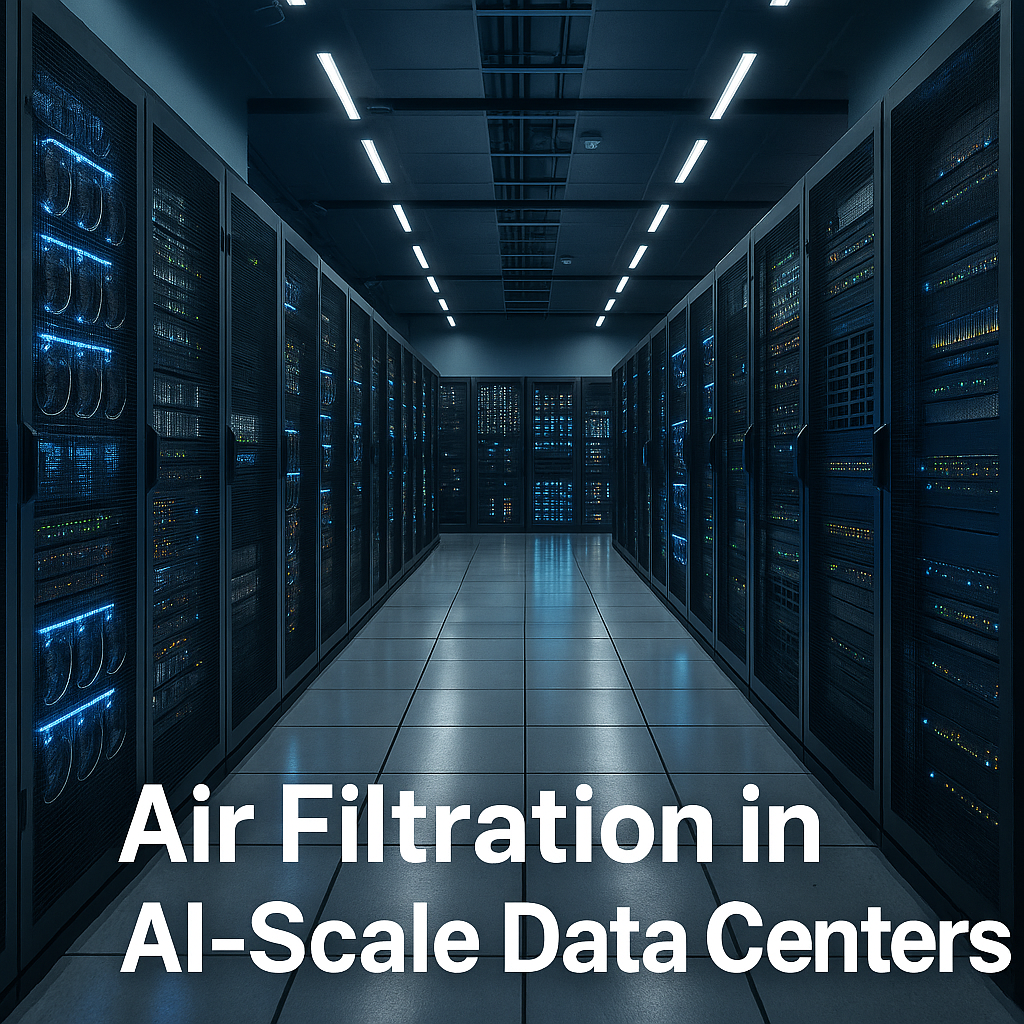
As artificial intelligence drives demand for bigger, faster, and more powerful computing, modern data centers are evolving into high-density hubs of innovation. With racks of GPUs and specialized processors pulling unprecedented energy and generating massive amounts of heat, the conversation often revolves around cooling, power management, and networking. But there’s a less visible, equally critical factor: air filtration.
Why Air Quality Matters More Than Ever
Every data center breathes in outside air, and with it comes dust, fibers, chemical vapors, and microscopic pollutants. Left unchecked, these contaminants wreak havoc on sensitive hardware:
- Corrosion: Sulfur-bearing gases and fine particulates attack solder joints, connectors, and circuitry, shortening hardware life.
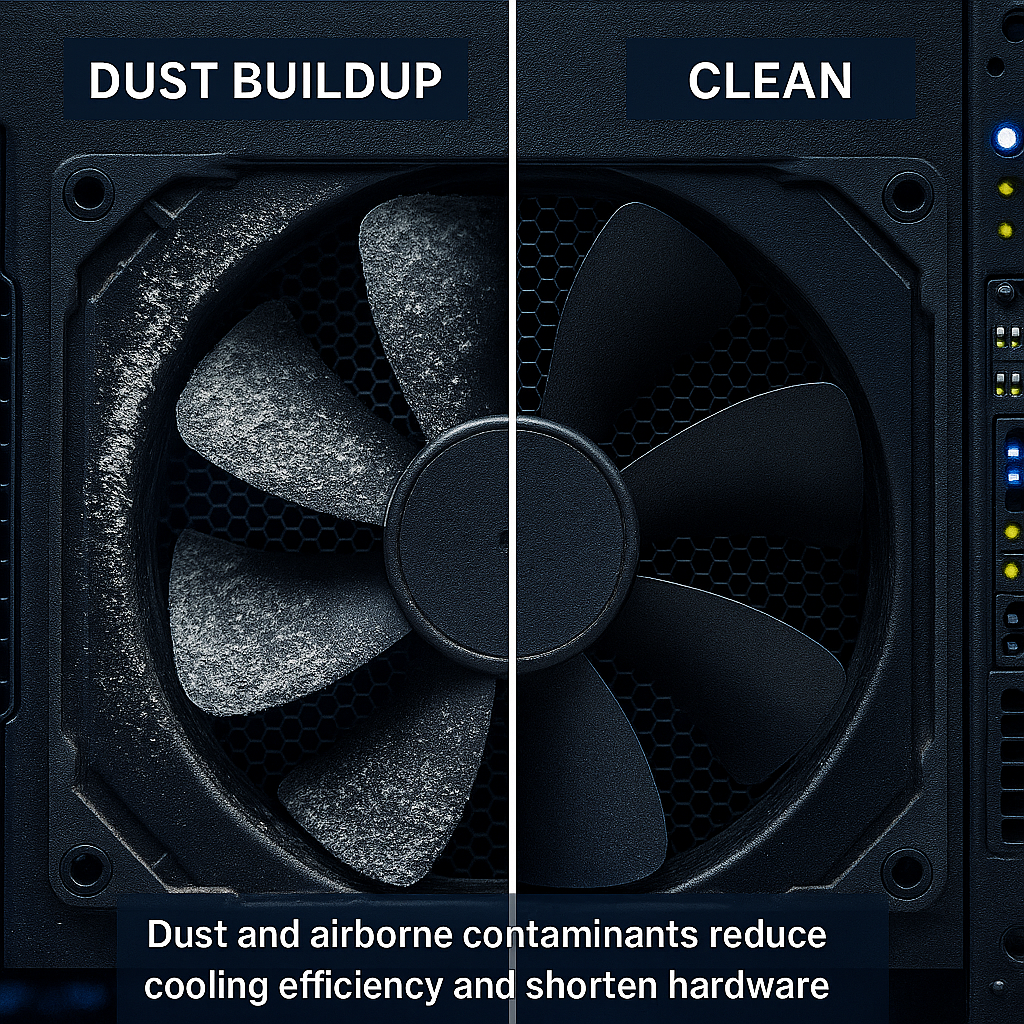
- Cooling inefficiency: Dust clogs fans and heat sinks, forcing systems to work harder to maintain safe operating temperatures.
- Optical disruption: AI-driven data centers rely on dense fiber-optic interconnects. Even small deposits on connectors can degrade performance.
When uptime is everything, even small interruptions caused by contamination can cost millions.
AI Workloads Magnify the Challenge
Traditional data centers already needed effective filtration, but AI raises the stakes:
- Higher rack power densities (40–60 kW per rack) mean hotter environments, more airflow, and greater exposure to airborne particles.
- Expensive GPUs and accelerators demand longer lifespans and more protection—failure isn’t just downtime, it’s capital loss.
- Constant operation for AI training, inference, and cloud services requires uncompromising reliability.
Simply put: more air is moving through AI-scale facilities, which means more contaminants—unless filtration systems scale accordingly.
Best Practices for Data Center Air Filtration
To protect sensitive infrastructure, today’s leading facilities rely on:
- Multi-stage filtration: Pre-filters to catch coarse dust, paired with high-efficiency filters (including HEPA or molecular options) to trap fine particulates and corrosive gases.
- Continuous monitoring: Sensors track air quality and filter performance, ensuring proactive maintenance rather than reactive firefighting.
- Optimized airflow design: Filters that deliver protection without increasing static pressure, preserving cooling system efficiency.
This isn’t just about compliance—it’s about preserving uptime, protecting multimillion-dollar hardware investments, and ensuring performance at scale.
A Trusted Source: DC Filters from Air Filter Factory
For operators who need reliable, purpose-built filtration, DC Filters by Air Filter Factory provide solutions engineered specifically for modern data centers. Their filters are designed to:
- Handle high-volume airflow required by AI-driven racks.
- Capture both particulates and corrosive gases that threaten sensitive electronics.
- Deliver consistent, cost-effective performance with options tailored to facility scale.
By partnering with a specialized provider like Air Filter Factory, data center managers gain peace of mind knowing that filtration is not an afterthought, but a strategic safeguard.
Conclusion: The Silent Backbone of AI Reliability
As data centers race to meet the explosive demand for artificial intelligence, air filtration is emerging as one of the quiet but indispensable foundations of reliability. Clean air protects uptime, hardware investment, and operational efficiency.
AI might be the star, but without the right filtration, the show doesn’t go on. That’s why more operators are turning to trusted providers like Air Filter Factory’s DC Filters to ensure their facilities are ready for the future.
